

Picture a night shift where the lights dip, a compressor cuts out, and the panel in the corner starts to smell hot. Nobody wants to be searching for a phone number at that point. If you run a plant, a warehouse or a commercial building, it helps to know what to do in the first few minutes and who you’ll call afterwards. This guide walks through both, plus the usual causes of failures and what to look for in a 24hr emergency electrician in Kitchener while things are still calm.
What to Do When the Power Fails
Safety comes before troubleshooting, always.
If there’s fire, smoke, sparking, or anyone has taken a shock, call 911 first. The electrician can wait.
If it’s not that serious, get people away from the affected area and shut down the equipment only if you can do it without touching anything damaged, wet or arcing. Then resist the urge to keep flipping the breaker. One reset is reasonable when nothing looks burnt. If it trips again, the breaker is doing its job and something behind it is wrong.
Before you call anyone, jot down what was running, what you heard or smelled, and roughly when it happened. It sounds minor, but those notes often save an electrician a good chunk of guesswork. And if the whole street is dark, check with your local utility first, since the fault may not be on your side of the meter at all.
Why Industrial Electrical Systems Fail
Most emergency calls come back to a short list of causes. An overloaded panel is a classic one, usually after a new machine was added without a capacity check. Worn or loose connections run hot for months and then fail all at once. Motor control centers (MCCs) and variable frequency drives (VFDs) develop faults, and so do generators and transfer switches, which is especially unlucky because they’re what you’re counting on during an outage.
Power quality is the sneaky one. Voltage irregularities won’t always trip anything, but they can quietly wear out equipment until it fails for no obvious reason.
The good news is that many of these give warning first. Breakers that trip for no clear reason, lights that flicker, and a panel that feels warm to the touch are all worth taking seriously well before they turn into a 2 a.m. call.
What Good Emergency Repair Looks Like
Restoring power is the visible part of the job. The part that matters just as much is figuring out why it failed. A good electrician makes the area safe, isolates the fault, and tests before putting full load back on, so the same thing doesn’t happen again by lunchtime. You should also get a clear explanation of what was done and what still needs attention.
If all you get is a quick patch and a shrug, that’s worth questioning.
How to Choose a 24hr Emergency Electrician in Kitchener
You’ll be making this decision under pressure, so it’s much easier to do it in advance.
Start with licensing. Electrical work in Ontario has to be done by licensed professionals and meet the Ontario Electrical Safety Code, and you should know who handles permits and Electrical Safety Authority (ESA) inspections when a repair calls for them.
Then test the “24/7” claim. Ask what actually happens when someone calls at midnight on a Sunday. A real person answering is different from a voicemail box, and it’s better to find that out now.
Experience matters too, and it’s specific. An office building and a plating shop are very different places to work. Ask whether the contractor has dealt with equipment like yours, whether that’s MCCs, VFDs, generators, UPS systems or DC rectifiers.
Finally, ask if they do maintenance as well as emergencies. A contractor who only shows up when things break keeps you in firefighting mode, while one who also does preventative maintenance can help you make fewer of those calls.
Preventing the Next Emergency
You won’t eliminate failures, but you can shrink the odds. Thermal imaging finds hot connections before they fail. Power quality testing helps when equipment behaves strangely and nobody can say why. A generator that’s never been load tested is a guess, not a backup. And if your load has grown, upgrading the system before adding more equipment is cheaper than reacting to a failure.
Where PowerInc Fits In
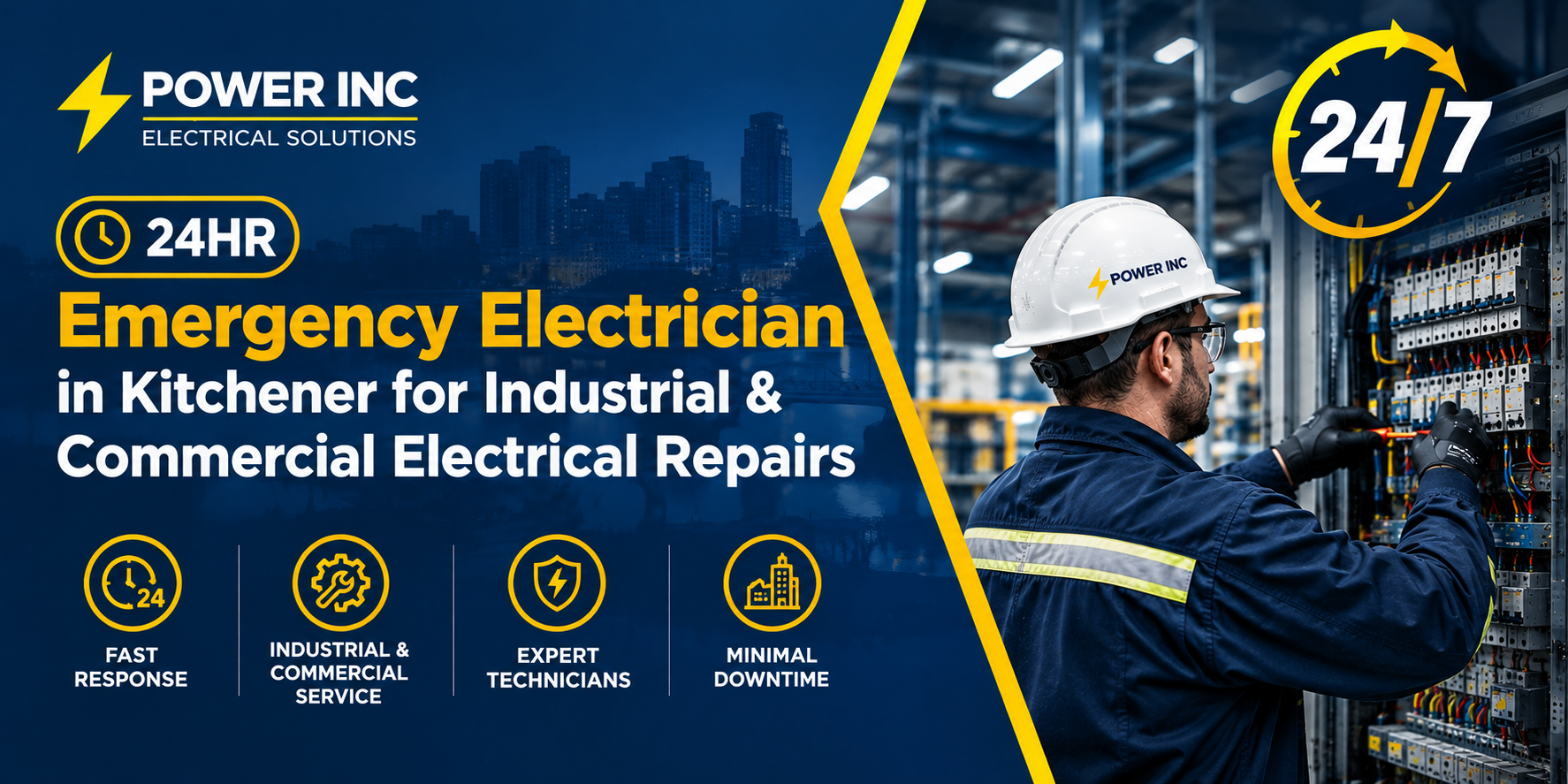
PowerInc is based in Kitchener, and emergency electrical repairs sit alongside its preventative maintenance, thermal imaging, power quality testing, generator and UPS work, and temporary power services. Its website describes 24/7 industrial and commercial service and more than 40 years serving industry, including manufacturing and plating plants, food and beverage processors, and warehouses. PowerInc also sells and services DC rectifiers for the plating industry.
FAQ
What counts as an electrical emergency in a commercial building?
Fire, smoke, sparking, a burning smell, a shock, or a critical piece of equipment that has lost power. A breaker that won’t stay on belongs on the list too. When you’re unsure, treat it as urgent.
Do I call 911 or an electrician first?
911 if there’s fire, injury or immediate danger. The electrician comes after the area is safe.
Can I reset a tripped breaker?
Once, if it’s safe and nothing looks damaged. If it trips again, leave it and call a professional.
How can I tell if it’s the utility or my own system?
Look outside. If neighbouring buildings are dark too, it’s probably the utility. If it’s only you, the fault is likely inside your building.
Can emergencies be prevented?
Not all of them, but scheduled maintenance, thermal imaging, power quality testing and timely upgrades reduce a lot of them.
What should I have ready when I call?
Your address, which equipment is affected, what happened just before, and whether anyone is at risk.
Conclusion
Electrical failures are stressful mainly because they’re unplanned. Know your first steps, understand what usually goes wrong, and pick your 24hr emergency electrician in Kitchener before you need one.
Want an emergency contact in place before the next failure? Have a look at PowerInc’s emergency electrical repair and industrial services or get in touch at 519-489-6777.

Leave a Reply